You have good photographs. You don't have a body of work.
Between the first attraction and a finished project there is a long stretch nobody talks about. It is where projects run aground, and after a while you stop mentioning them. This interactive essay covers that stretch in nineteen chapters, from the idea to the market: at every stage, a photographer who actually went through it, with the videos and the sources sitting inside the text.
Not one of them is a technical problem. That is exactly why no course covers them, and why they are what this book is about.
01You have photographs, not a project
Four thousand files and nothing that holds them together.
02The subject is somebody else's
You chose it because it photographs well, not because it is yours.
03You cannot say what it is about
You can describe what is in the pictures. That is not the same thing.
04The distance is wrong
Too close to see it, or too far to be let in.
05You have stalled
Six months in, the enthusiasm is gone and you think that means it was a bad idea.
06You cannot cut
Every picture cost you something, so every picture stays.
07The order is arbitrary
The sequence is chronological, because no other reason presented itself.
08It never comes out
It sits on a drive, finished enough to be over and unfinished enough to be hidden.
An essay to walk through
You read it, look at it, search it, annotate it, listen to it
There are no formulas here, because nobody can give you any. There are methods that worked for other people, real experience and real stories, put back in order until they became a process. And ten different ways of going through them.
01 · Read
The whole text
The complete essay, chapter by chapter. Nothing is cut or summarised.
02 · Look
Almost a hundred visual concepts
When an argument is easier to grasp by looking at it, the essay draws it.
03 · Go deeper
Curated sources, inside the text
Videos and sources chosen by hand, at the point in the text where they are needed.
04 · Search
Across every chapter
One word, and you land on the exact passage. Cmd+K works too.
05 · Annotate
Your notes stay put
Highlight a sentence, save it, and find it again when you come back.
06 · Listen
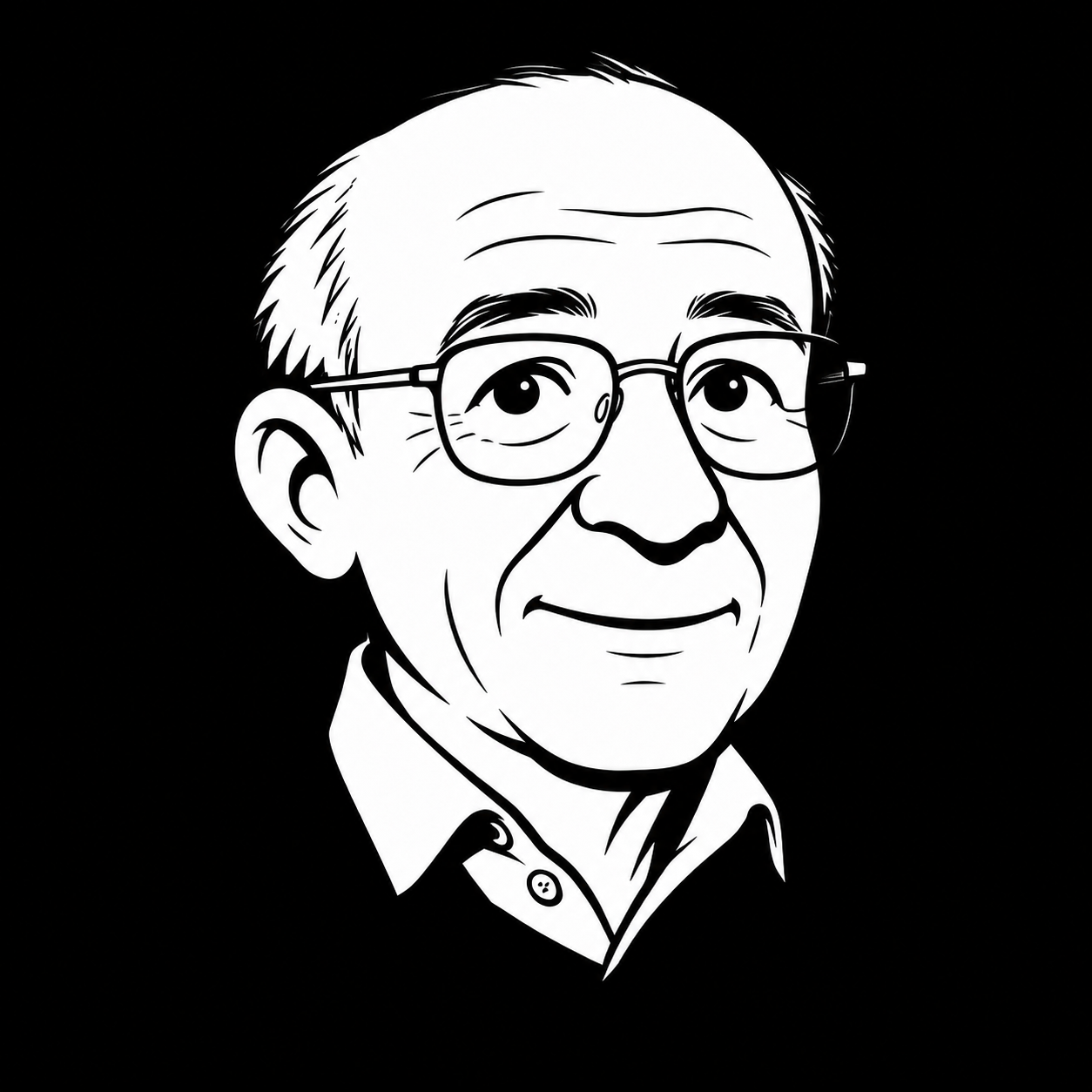
Grandpa Dean’s summary
A minute of audio at the end of each chapter, for when your eyes are done.
07 · Do
“Do it now”
Three concrete things to start, and they stay ticked when you return.
08 · Share
Cards you can take outside
Every visual concept becomes an image for Instagram, with one button.
09 · Work
The project workbook
The essay’s questions with the templates to fill in. It exports and it prints.
10 · Come back
Updates included
New sources, revised chapters, new instruments: they are already there.
The way it is made
Almost a hundred visual concepts
Every time the reasoning reaches a point that is easier to grasp by looking at it,
the essay draws it. They are cards built as instruments: you recognise them, you find them again, and you can
take them out as an image when you need one. These are the frames that recur.
vs
The contrast
The steps
The threshold
The fork
→→
The sequence
The layersThe arc
The grid
83
The numberThe lineThe drawing
The calendarThe balanceThe cycle
The stackThe strip
vs
The contrast
The steps
The threshold
The fork
→→
The sequence
The layersThe arc
The grid
83
The numberThe lineThe drawing
The calendarThe balanceThe cycle
The stackThe strip
Eleven families, almost a hundred cards, spread across all nineteen chapters.
Content curation
The sources are not decoration
Videos and links are not there to fill space. They are material looked for, watched and chosen
one by one, placed at the point in the text where they are needed. Curation, not an automatic list,
and it is kept up to date.
Video
Interviews, lectures, documentaries, books leafed through. Embedded where the text needs them.
Articles
Essays and reporting that widen the case, picked one by one and not fished out at random.
Archives
Collections, catalogues, museum pages: the places where the work can actually be looked at.
Author cards
Who they are, when they were born, where to find them. Hover the name and it appears.
How it looks inside the chapter
ASX TV · Stephen Shoreinterview · American Surfaces
Chris Killip · Seacoaldocumentary · BBC
Aperture · Sally Mannreading · wet collodion
MoMA · Robert Frankarchive · the contact sheets
ASX TV · Stephen Shoreinterview · American Surfaces
Chris Killip · Seacoaldocumentary · BBC
Aperture · Sally Mannreading · wet collodion
MoMA · Robert Frankarchive · the contact sheets
One author per chapter
Every turn, a real case
No abstract theory. Every step of the process is told through somebody who actually went through it, and a body of work that exists. No author appears twice: what comes out is a small side history of photography.
Included with your access
The project workbook
The essay is read, the workbook is filled in. It is the working instrument that sits beside the chapters: the questions of the route in the order they arrive, the templates to complete, and the room to write down the project you have in your hands. What you write stays saved in your browser, exports to a file, and prints, if you would rather work on it with a pen.
The questions, one per page
The matrix of position
The funnel of editing
The timeline
The grid of sources
What you see above is only the shape of the pages, not what is written inside: the workbook opens with the key, along with the chapters.
The route
Nineteen stages, from the idea to the market
The title already says what each one deals with. If you have your key, this is where you go in.
Start here
The preface and chapter one, free
What you never stop looking at
Plus the preface, which says what this book means by project and why the middle stretch is the part nobody writes about. Read the preface now →
Where a project actually begins, before there is any idea: Alec Soth's lists taped to a steering wheel, Perec's teaspoons, Vivian Maier's hundred thousand negatives and what they cost her. Five thousand words, six videos, ten drawn cards. Leave your email and it opens.
The whole chapterVideos and audio includedNo spam, unsubscribe whenever
The full edition
The other eighteen chapters
$49one payment, lifetime access, updates included
Straight with you about this edition. The essay was written in Italian and has been read there for months. All nineteen chapters have been carried over into English by hand and not by machine, because the way it is written is most of what it is: where a sentence would not survive the crossing, it was rewritten rather than translated word for word.
Everything is here, including the audio: a one-minute summary read at the end of each chapter, in English, by the same voice all the way through.